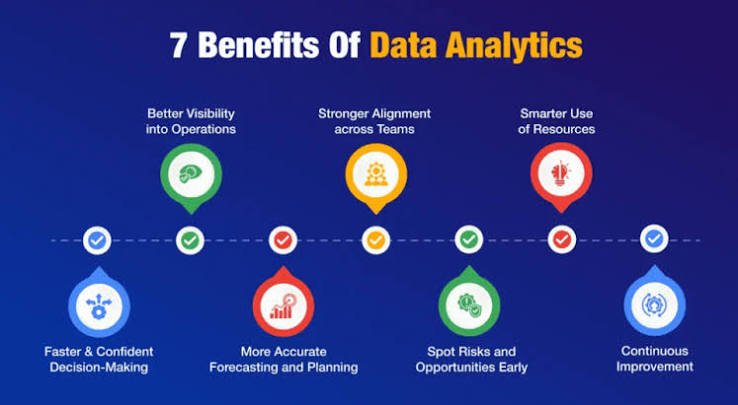
In today’s digital world, businesses collect enormous amounts of data every day. Customer purchases, website visits, social media activity, sales records, operational information, and market trends all create valuable data. However, collecting data is only the first step. The real value comes from understanding that data and using it to make better decisions. This is where Predictive Analytics becomes important.
Predictive Analytics is a powerful approach that uses historical data, statistical techniques, machine learning, and advanced algorithms to identify patterns and estimate what may happen in the future. Instead of simply asking what happened in the past, businesses can use predictive methods to ask a more useful question: What is likely to happen next?
From online shopping and banking to healthcare, marketing, manufacturing, and transportation, Predictive Analytics is changing how organizations plan and operate. It helps companies identify opportunities, reduce risks, understand customers, and improve their decision-making processes.
What Is Predictive Analytics?
Predictive Analytics is the process of examining existing and historical data to make informed predictions about future events or outcomes.
For example, an online store may analyze a customer’s previous purchases, browsing behavior, product searches, and interactions with emails. By studying these patterns, the company may predict which products the customer is likely to purchase next.
Similarly, a bank can analyze transaction patterns to identify unusual activity that could indicate potential fraud. A manufacturer can study equipment data to predict when a machine may require maintenance.
The important point is that Predictive Analytics does not simply guess the future. It uses available information and mathematical techniques to estimate possible outcomes. The quality of the prediction depends on factors such as data quality, the selected model, and how accurately the relevant patterns are identified.
How Does Predictive Analytics Work?
Predictive Analytics generally involves several important steps.
1. Collecting Data
The first step is gathering relevant data. This may include customer information, sales records, website activity, financial transactions, sensor readings, or other business data.
Good predictions require useful and reliable information. If the underlying data is incomplete, outdated, or inaccurate, the resulting predictions may also be unreliable.
2. Preparing the Data
Raw data often contains duplicate records, missing values, errors, or irrelevant information. Before analysis begins, organizations usually clean and organize the data.
This process may involve removing duplicates, correcting errors, handling missing information, and selecting the variables that are most useful for the prediction.
3. Finding Patterns
Once the data has been prepared, analysts can examine it to discover relationships and trends.
For example, a retailer may discover that customers who purchase a particular product are also more likely to purchase another product. These relationships can become useful features for a predictive model.
4. Building a Predictive Model
Statistical models and machine learning algorithms can then be used to create predictions. Depending on the problem, organizations may use techniques such as regression, decision trees, classification algorithms, or other machine learning methods.
The model learns from historical examples and attempts to identify patterns that can be applied to new data.
5. Testing the Model
A predictive model should be tested before organizations depend on its results. Analysts compare predictions with known outcomes to understand how well the model performs.
Testing can help identify problems such as overfitting, poor data quality, or insufficient variables.
6. Using Predictions
After a model has been evaluated, its predictions can support real-world decisions. A business might use them to manage inventory, personalize marketing campaigns, detect potential risks, or improve customer service.
Why Is Predictive Analytics Important?
One of the biggest advantages of Predictive Analytics is that it helps organizations move from reactive decision-making toward more proactive planning.
Without predictive tools, a company may notice a problem only after it occurs. With predictive insights, the organization may have an opportunity to recognize warning signs earlier.
For example, if a business can predict that demand for a product will increase, it can prepare inventory in advance. If a company can identify customers who may be considering leaving, it can develop strategies to improve customer retention.
This ability to anticipate potential outcomes can save time, reduce costs, and create new business opportunities.
Applications of Predictive Analytics
Predictive Analytics is used across many industries.
Predictive Analytics in Marketing
Marketing teams can use customer data to understand buying behavior and predict which customers are most likely to respond to a particular campaign.
Businesses can also use predictive models to segment audiences, recommend products, estimate customer lifetime value, and identify customers who may stop engaging with a brand.
This allows marketers to create more relevant campaigns instead of sending the same message to everyone.
Predictive Analytics in Retail
Retail companies can use predictive models to forecast product demand. Understanding future demand can help businesses maintain appropriate inventory levels.
Predictive Analytics can also support personalized product recommendations. Online retailers often analyze browsing and purchasing patterns to suggest products that may interest individual customers.
Predictive Analytics in Finance
Financial organizations handle large quantities of data, making predictive methods particularly useful.
Banks and financial institutions may use predictive models to evaluate credit risk, detect unusual transactions, forecast financial trends, and identify potential fraud.
However, financial predictions should be carefully monitored because inaccurate models can create serious consequences.
Predictive Analytics in Healthcare
Healthcare organizations can use data-driven models to support risk assessment, resource planning, and patient management.
For example, predictive systems may help identify patients who have a higher risk of certain complications or help hospitals estimate future demand for resources.
Predictive tools are designed to support professional decision-making rather than replace qualified healthcare professionals.
Predictive Analytics in Manufacturing
Manufacturers can collect information from machines, sensors, and production systems. By analyzing this information, companies can identify patterns associated with equipment problems.
This can support predictive maintenance, where maintenance is scheduled based on the condition and predicted behavior of equipment rather than relying only on fixed schedules.
The result can be less unexpected downtime and more efficient maintenance planning.
Benefits of Predictive Analytics
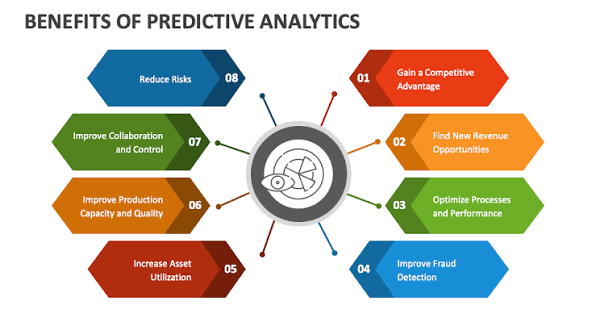
There are several reasons organizations invest in Predictive Analytics.
Better decision-making: Businesses can use evidence and data patterns to support important decisions.
Improved efficiency: Predictive insights can help organizations identify inefficient processes and allocate resources more effectively.
Risk reduction: Organizations can identify potential problems before they become larger issues.
Customer personalization: Businesses can better understand customer behavior and provide more relevant products or services.
Cost savings: Accurate forecasting can reduce waste, unnecessary inventory, and avoidable operational expenses.
Competitive advantage: Companies that understand their data can respond more quickly to changing market conditions.
Challenges of Predictive Analytics
Although Predictive Analytics offers many benefits, it also has limitations.
Data Quality
Poor-quality data can lead to poor predictions. Missing, incorrect, or biased information can affect the performance of a predictive model.
Privacy Concerns
Organizations often work with sensitive customer and employee information. They must handle data responsibly and follow applicable privacy requirements.
Model Bias
A predictive model can reproduce biases present in historical data. If certain groups are unfairly represented in the training data, predictions may also become unfair.
Changing Conditions
Historical patterns do not always remain the same. Customer behavior, economic conditions, technology, and market trends can change over time.
For this reason, predictive models should be monitored and updated when necessary.
Understanding Results
Some advanced models can be difficult for people to interpret. Organizations need to understand not only what a model predicts but also whether the prediction is appropriate for the decision being made.
Predictive Analytics vs. Descriptive Analytics
Descriptive Analytics focuses mainly on understanding what has already happened.
For example, a company may examine last month’s sales report to determine which products sold the most.
Predictive Analytics goes one step further by using historical information to estimate what may happen in the future.
There is also another important concept called prescriptive analytics. While Predictive Analytics asks what is likely to happen, prescriptive analytics focuses more on what actions could be taken based on those predictions.
Together, these approaches can provide organizations with a more complete understanding of their data.
The Future of Predictive Analytics
The future of Predictive Analytics is closely connected with artificial intelligence, machine learning, automation, and the growing amount of digital data.
As organizations collect more real-time information, predictive systems may become increasingly useful for making faster decisions. Businesses may be able to identify changing customer preferences, forecast demand more accurately, monitor operations continuously, and respond to risks earlier.
However, technology alone is not enough. Successful Predictive Analytics requires good data, appropriate models, skilled professionals, responsible data practices, and continuous evaluation.
Organizations that combine these elements can turn large amounts of information into practical insights.
Frequently Asked Questions About Predictive Analytics
1. What is Predictive Analytics?
Predictive Analytics is a data analysis method that uses historical data, statistics, and machine learning techniques to predict possible future events or outcomes.
2. How does Predictive Analytics work?
Predictive Analytics works by collecting and analyzing historical data, identifying patterns, building predictive models, testing those models, and using their results to support future decisions.
3. Why is Predictive Analytics important for businesses?
Predictive Analytics helps businesses make informed decisions, identify potential risks, understand customer behavior, forecast demand, reduce costs, and discover new opportunities.
4. What are some common uses of Predictive Analytics?
Common uses include sales forecasting, customer behavior analysis, fraud detection, risk assessment, demand forecasting, predictive maintenance, and personalized marketing.
5. What is the difference between Predictive Analytics and Descriptive Analytics?
Descriptive Analytics focuses on understanding what happened in the past, while Predictive Analytics uses historical data to estimate what may happen in the future.
6. Can small businesses use Predictive Analytics?
Yes. Small businesses can use Predictive Analytics for tasks such as forecasting sales, understanding customer preferences, managing inventory, and improving marketing decisions.
7. What technologies are used in Predictive Analytics?
Predictive Analytics can use statistical methods, machine learning algorithms, artificial intelligence, data visualization tools, databases, and data processing technologies.
8. Is Predictive Analytics always accurate?
No. Predictive Analytics does not guarantee a specific future outcome. Its accuracy depends on factors such as data quality, model selection, historical patterns, and changing market conditions.
9. What are the benefits of Predictive Analytics?
Major benefits include better decision-making, improved efficiency, reduced risks, cost savings, better customer experiences, improved forecasting, and more effective resource planning.
10. What is the future of Predictive Analytics?
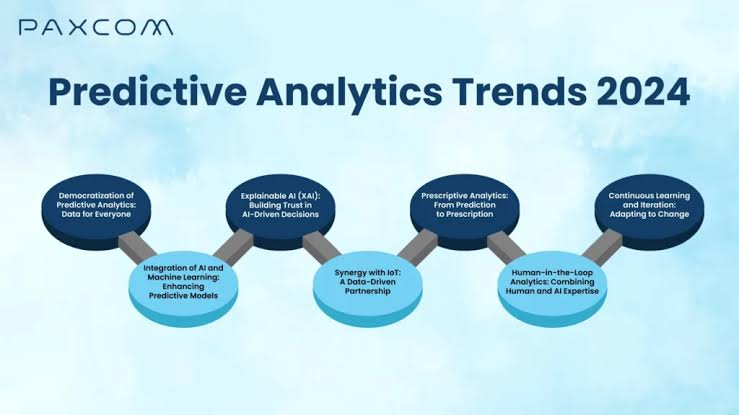
The future of Predictive Analytics is closely connected with artificial intelligence, machine learning, automation, and real-time data. These technologies are expected to make predictive insights faster and more useful for organizations.
Final Thoughts
Predictive Analytics has become an important part of modern data-driven decision-making. By examining historical information and identifying meaningful patterns, organizations can estimate possible future outcomes and prepare for different scenarios.
Its applications range from marketing and retail to finance, healthcare, manufacturing, and many other industries. The technology can improve efficiency, reduce risks, personalize customer experiences, and support smarter planning.
At the same time, businesses should recognize that predictions are not guarantees. Models depend on the quality of their data and assumptions, and changing circumstances can affect their accuracy.
When used responsibly and combined with human judgment, Predictive Analytics can transform raw data into useful insight and help organizations make more informed decisions about the future.