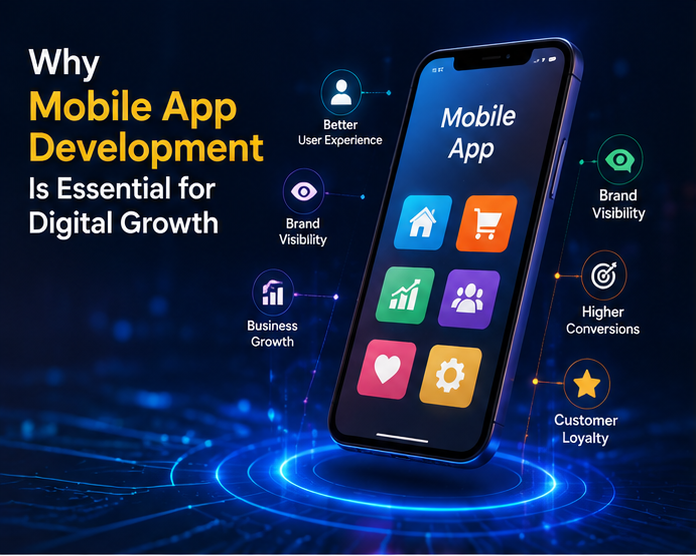
The way people interact with businesses has changed dramatically. Smartphones are now used for shopping, banking, entertainment, communication, education, travel, healthcare, and countless everyday activities. As mobile usage continues to shape consumer behavior, businesses need to provide convenient digital experiences that match these expectations.
This is where mobile app development becomes increasingly important.
A well-designed mobile application can help businesses connect directly with customers, improve user experiences, strengthen brand recognition, generate sales, and create new opportunities for digital expansion. From small startups to established enterprises, organizations are investing in mobile applications as part of their broader digital strategies.
However, developing an app should not simply be about following a technology trend. Businesses need to understand how mobile applications support genuine customer needs and measurable business objectives.
This article explores why mobile app development is essential for digital growth and how businesses can use mobile technology to build stronger and more competitive digital experiences.
What Is Mobile App Development?
Mobile app development is the process of designing, building, testing, deploying, and maintaining software applications created for mobile devices such as smartphones and tablets.
Applications can be developed specifically for platforms such as Android and iOS or built using cross-platform technologies that allow developers to create applications for multiple operating systems from a shared codebase.
Mobile applications generally fall into three major categories.
Native Mobile Apps
Native applications are developed specifically for a particular operating system.
They can take advantage of device features and are often designed to provide high performance and a highly optimized user experience.
Cross-Platform Apps
Cross-platform development allows businesses to create applications that can operate across multiple mobile platforms while sharing significant portions of their code.
This approach can reduce development effort for certain projects.
Web-Based Mobile Applications
Web applications operate through mobile browsers rather than being installed like traditional applications.
Modern web technologies can provide increasingly app-like experiences, although their capabilities can differ from native applications.
Choosing the right approach depends on the project’s budget, functionality, audience, performance requirements, and long-term objectives.
Why Mobile App Development Matters for Digital Growth
Digital growth means more than increasing website traffic.
Businesses need to attract customers, maintain engagement, improve conversions, strengthen loyalty, and create scalable digital channels.
Mobile applications can support each of these objectives.
A website might introduce someone to a brand, while a useful mobile application can become a regular part of that customer’s everyday digital experience.
This creates opportunities for businesses to build longer-lasting customer relationships.
1. Mobile Apps Provide a Better User Experience
User experience is one of the most important factors in digital success.
Customers expect digital platforms to be fast, convenient, intuitive, and easy to navigate. A poorly designed experience can cause users to leave and look for alternatives.
Mobile apps can provide experiences specifically designed for smartphone users.
Instead of adapting a desktop interface to a smaller screen, developers can design navigation, buttons, menus, content, and interactions around mobile behavior.
Features such as saved preferences, biometric authentication, location services, cameras, and notifications can make applications even more convenient.
A smooth user experience encourages customers to interact with the business more frequently, supporting stronger digital engagement.
2. Mobile Applications Increase Customer Engagement
One major advantage of mobile apps is their ability to create direct communication between businesses and users.
When customers install an application, the brand gains a dedicated presence on their devices.
Businesses can provide personalized recommendations, account updates, order information, loyalty benefits, and relevant notifications.
Push notifications can be particularly useful when used responsibly.
For example, an online retailer might notify customers when an ordered product has shipped. A food delivery application could provide updates about an active order.
However, businesses should avoid sending excessive or irrelevant notifications.
The objective should be to provide value rather than simply increase the number of messages users receive.
3. Mobile Apps Can Strengthen Brand Recognition
Brand visibility plays an important role in digital growth.
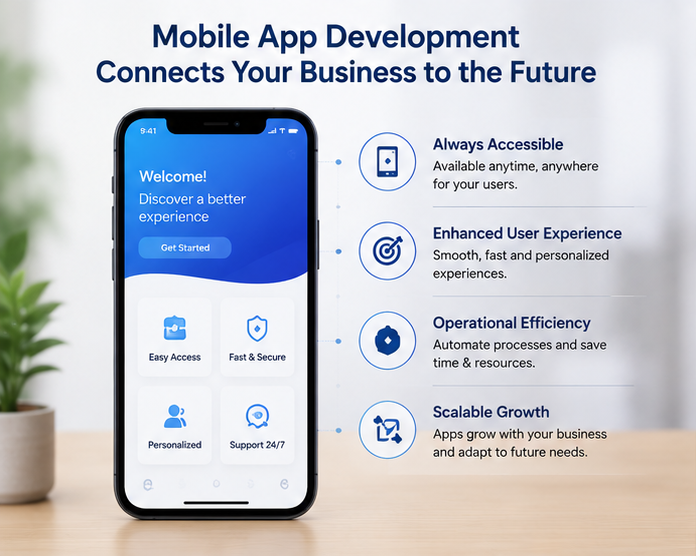
An installed mobile application keeps the brand accessible directly from a customer’s device. Each interaction can reinforce the company’s visual identity, services, and overall experience.
A professionally designed application should maintain consistent branding through elements such as logos, typography, layouts, imagery, and communication style.
Consistency helps customers recognize the business across different digital channels.
However, branding goes beyond appearance.
The performance and usability of an application also influence how users perceive the company. A fast, reliable, and intuitive application can strengthen trust, while a confusing or unstable application may damage brand perception.
4. Mobile Apps Support E-Commerce Growth
Mobile commerce has become an important part of online retail.
Customers increasingly expect to browse products, compare options, manage shopping carts, complete purchases, and track orders using smartphones.
A dedicated e-commerce application can simplify this journey.
Businesses can provide features such as:
- Personalized product recommendations
- Saved shopping carts
- Wish lists
- Secure payment options
- Order tracking
- Customer accounts
- Product search and filters
- Loyalty programs
Reducing unnecessary steps during the purchasing process can improve the overall customer experience.
Mobile applications can also encourage repeat purchases by making it easier for existing customers to return to the store.
For digital retailers, this convenience can become an important competitive advantage.
5. Mobile App Development Enables Personalization
Personalization has become increasingly important in modern digital marketing.
Customers do not necessarily want to see the same experience every time they interact with a business.
Mobile applications can use customer preferences and permitted behavioral data to provide more relevant experiences.
For example, a streaming application can recommend content based on previous viewing behavior.
An online store might highlight products related to previous purchases or saved preferences.
A fitness application can adjust recommendations based on goals selected by the user.
Effective personalization can make digital experiences feel more relevant and convenient.
Businesses should nevertheless handle personal data responsibly, provide appropriate privacy information, and follow applicable data protection requirements.
6. Mobile Apps Create New Revenue Opportunities
Mobile app development can create additional ways for businesses to generate revenue.
Depending on the business model, applications may support:
- Product sales
- Subscription services
- Premium memberships
- In-app purchases
- Service bookings
- Digital products
- Advertising
- Commission-based transactions
For example, an educational platform might provide free lessons while offering premium courses through a subscription.
A service business could allow customers to book and pay for appointments directly through its application.
The most effective revenue model depends on what users genuinely value.
Businesses should avoid designing applications around monetization alone. An app needs to solve a problem or provide meaningful convenience before customers are likely to use it consistently.
7. Mobile Applications Improve Customer Loyalty
Acquiring new customers can require significant marketing investment.
For many businesses, encouraging existing customers to return is equally important.
Mobile applications can support customer retention through convenient experiences and loyalty features.
Businesses may offer points, rewards, exclusive benefits, personalized offers, membership programs, or early access to selected products.
The application can also make repeat interactions easier.
For example, customers might save delivery addresses, preferences, payment methods, or previous orders.
Removing friction can encourage users to return rather than start the purchasing process again somewhere else.
Customer loyalty ultimately depends on value and service quality, but a well-designed application can make maintaining that relationship easier.
8. Mobile Apps Provide Valuable Business Insights
Digital growth requires businesses to understand customer behavior.
Mobile applications can generate useful information about how users interact with digital services, provided data collection follows appropriate privacy and consent requirements.
Businesses can analyze information such as:
- Popular application features
- User journeys
- Conversion rates
- Customer retention
- Purchase patterns
- App performance
- Feature engagement
These insights can help organizations make more informed decisions.
For example, if analytics show that many customers abandon the checkout process at the same stage, the business can investigate potential usability problems.
If a particular feature receives very little engagement, developers can evaluate whether it should be improved, redesigned, or removed.
Data-driven decision-making can help companies improve products while using development resources more effectively.
9. Mobile Apps Can Improve Customer Service
Customer expectations for support have increased.
People often want fast access to answers without making lengthy phone calls or searching through complicated websites.
Mobile applications can provide customer service features directly within the user experience.
These might include live chat, support tickets, order tracking, help centers, automated assistants, and account-management tools.
For simple problems, self-service options can help customers find solutions immediately.
More complicated issues can be directed to human support teams.
Combining automation with accessible human support can improve service efficiency without making the experience feel disconnected.
10. Mobile Apps Help Businesses Stay Competitive
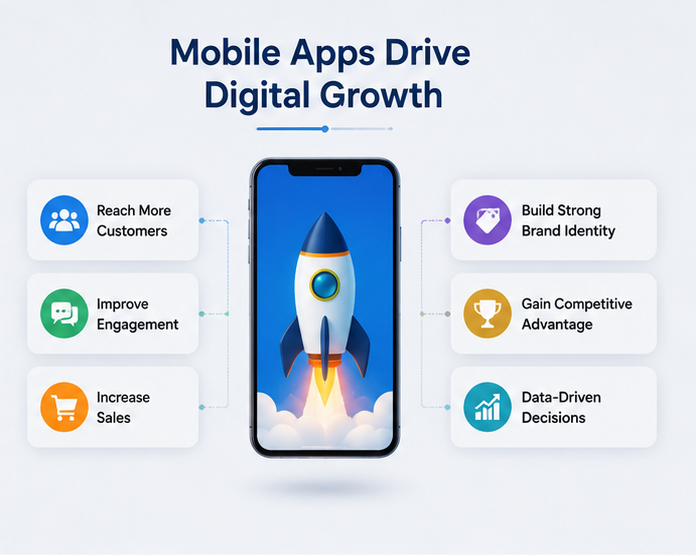
Digital competition continues to increase across industries.
Customers often compare businesses based not only on price but also on convenience.
If competitors provide fast and convenient mobile experiences while another company relies on outdated digital systems, customers may prefer the easier option.
This does not mean every business automatically needs an application.
A small local business may receive greater value from improving its mobile-friendly website before investing in app development.
However, businesses with frequent customer interactions, online transactions, memberships, bookings, digital services, or loyalty programs can potentially gain significant value from a dedicated mobile application.
The decision should be based on customer needs rather than simply copying competitors.
11. Mobile Apps Support Omnichannel Digital Strategies
Customers rarely interact with a company through only one channel.
Someone might discover a product through social media, research it using Google, visit the company’s website, install its application, purchase through the app, and later contact customer support.
Businesses therefore need their digital channels to work together.
Mobile applications can become an important component of an omnichannel strategy.
Customer accounts, preferences, orders, loyalty points, and support information can potentially remain connected across different platforms.
This creates a smoother experience and reduces unnecessary friction between channels.
12. Artificial Intelligence Is Transforming Mobile App Development
Artificial intelligence is changing how mobile applications are developed and experienced.
AI-powered features can support personalization, customer service, recommendations, image recognition, predictive analytics, voice interactions, and automation.
For example, an e-commerce application could use AI to recommend relevant products based on customer interests.
A banking application could use intelligent systems to identify unusual account activity.
Businesses are also using AI-assisted development tools to support tasks such as coding, testing, debugging, and application optimization.
As AI technology continues developing, its integration with mobile applications is likely to create increasingly intelligent digital experiences.
13. Security Must Be a Priority
Mobile applications can handle sensitive information, including customer details, login credentials, payment information, and business data.
Security should therefore be considered throughout the entire development lifecycle.
Developers should implement appropriate security measures such as encryption, secure authentication, careful API design, access controls, secure data storage, and regular software updates.
Applications should also request only the device permissions genuinely required for their functionality.
Maintaining security is an ongoing responsibility.
New vulnerabilities can emerge after an application launches, making continuous monitoring, testing, maintenance, and security updates essential.
Mobile App Development and SEO
Mobile applications and traditional website SEO serve different purposes, but they can support the same broader digital strategy.
Search-optimized websites can attract new visitors through Google and other search engines.
Once users discover the brand, businesses can encourage suitable customers to use their application for more convenient future interactions.
This creates a digital journey where search supports discovery while the application supports engagement, retention, and repeat transactions.
Businesses should therefore avoid treating app development as a complete replacement for SEO.
A strong digital strategy can include both.
How to Build a Successful Mobile App
Successful mobile app development begins with understanding the user.
Before investing heavily in development, businesses should identify the problem the application will solve.
Research the target audience, study competitors, determine essential features, establish a realistic budget, and define measurable objectives.
The first version does not need every imaginable feature.
Launching a focused application with valuable core functionality can make it easier to gather real user feedback.
Businesses can then improve the application based on actual usage rather than assumptions.
Testing is equally important.
Applications should be tested for functionality, security, usability, performance, compatibility, and accessibility before release.
Common Mobile App Development Mistakes
One common mistake is adding too many features.
Complex applications can become difficult to navigate and expensive to maintain.
Another mistake is ignoring performance. Users are unlikely to continue using an application that frequently crashes, freezes, or takes too long to load.
Businesses should also avoid neglecting updates after launch.
Operating systems, devices, security requirements, and user expectations continually change. Applications need ongoing maintenance to remain reliable.
Finally, companies should avoid creating an application without a clear business objective.
Technology should solve a genuine problem rather than exist simply because mobile apps are popular.
The Future of Mobile App Development
Mobile app development will continue evolving alongside technologies such as artificial intelligence, cloud computing, augmented reality, Internet of Things devices, advanced mobile networks, and wearable technology.
Applications are likely to become increasingly personalized and connected.
Users may interact with mobile services through voice, cameras, smart devices, wearable technology, and intelligent assistants rather than relying exclusively on traditional touch interfaces.
Cloud technologies will also allow applications to access increasingly powerful computing resources without requiring all processing to happen directly on the smartphone.
At the same time, privacy, security, accessibility, and user trust will remain essential.
Businesses that combine innovative technologies with genuinely useful experiences will be better positioned to benefit from future mobile growth.

Conclusion
Understanding why mobile app development is essential for digital growth requires looking beyond the application itself.
A successful mobile app can become a direct connection between a business and its customers. It can improve user experience, strengthen engagement, support e-commerce, create revenue opportunities, increase loyalty, provide useful customer insights, and improve service accessibility.
However, simply launching an application does not guarantee digital growth.
Businesses need to develop apps around real customer needs, maintain strong security, monitor performance, use data responsibly, and continuously improve the experience.
When combined with SEO, content marketing, social media, paid advertising, and other digital channels, mobile app development can become a powerful part of a long-term digital growth strategy.