Introduction
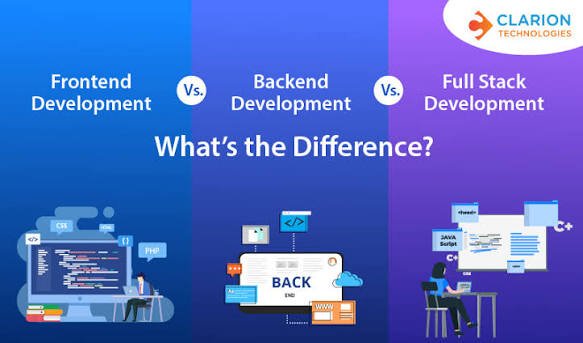
Software development offers many exciting career paths, but one of the first decisions every beginner faces is choosing between Frontend Development, Backend Development, and Full-Stack Development. Each specialization plays a vital role in building modern websites and web applications, and each comes with its own set of skills, responsibilities, challenges, and career opportunities.
In 2026, businesses continue investing heavily in digital products, creating strong demand for skilled developers across all three fields. Whether you’re interested in designing beautiful user interfaces, building powerful server-side systems, or mastering both, choosing the right path depends on your interests, strengths, and long-term career goals.
This guide compares frontend, backend, and full-stack development to help you decide which career path is right for you.
What Is Frontend Development?
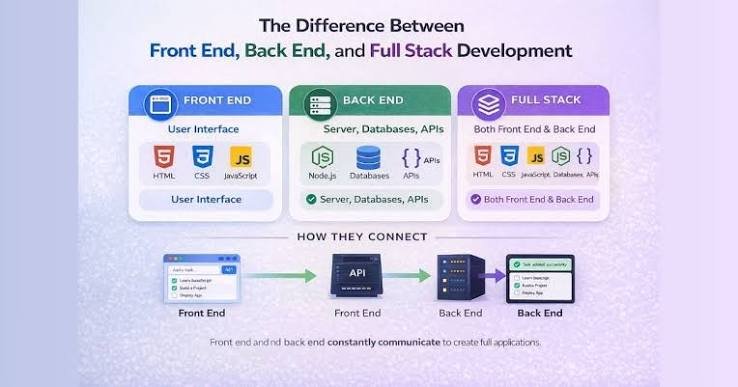
Frontend development focuses on the parts of a website or application that users see and interact with directly.
Frontend developers build:
- Website layouts
- Navigation menus
- Buttons
- Forms
- Animations
- Responsive designs
- User interfaces
Their goal is to create websites that are visually appealing, fast, and easy to use.
What Is Backend Development?
Backend development handles everything behind the scenes.
Backend developers build and maintain:
- Servers
- Databases
- APIs
- Authentication systems
- Business logic
- Security
- Data processing
Without backend development, websites cannot store user information, process payments, or perform dynamic functions.
What Is Full-Stack Development?
Full-stack developers work on both the frontend and backend.
They can:
- Design user interfaces
- Build server-side applications
- Manage databases
- Create APIs
- Deploy applications
- Debug entire systems
Because of their broad skill set, full-stack developers are valuable in startups, agencies, and many software companies.
Frontend vs Backend vs Full-Stack: Quick Comparison
| Feature | Frontend | Backend | Full-Stack |
|---|---|---|---|
| Main Focus | User Interface | Server & Database | Frontend + Backend |
| Visible to Users | Yes | No | Both |
| Creativity | Very High | Moderate | High |
| Logic & Problem Solving | Moderate | Very High | Very High |
| Learning Curve | Easier | Moderate | Most Challenging |
| Job Demand | High | High | Very High |
| Salary Potential | High | High | Very High |
Frontend Development
What You’ll Learn
Frontend developers focus on creating interactive and visually appealing web applications.
Core skills include:
- HTML
- CSS
- JavaScript
- Responsive Design
- UI Components
- Accessibility
- Browser Compatibility
Daily Responsibilities
Frontend developers typically:
- Build web pages
- Improve user experience
- Optimize website performance
- Fix layout issues
- Create responsive designs
- Work with designers
Advantages
- Great for creative people
- Immediate visual results
- Easier entry point for beginners
- High demand
- Strong freelance opportunities
Challenges
- Browser compatibility issues
- Constant design updates
- Keeping up with frontend technologies
- Performance optimization
Backend Development
What You’ll Learn
Backend developers focus on application functionality.
Important topics include:
- Server-side programming
- Databases
- APIs
- Authentication
- Security
- Performance optimization
- Cloud services
Daily Responsibilities
Backend developers often:
- Build APIs
- Manage databases
- Process user requests
- Handle authentication
- Improve security
- Optimize server performance
Advantages
- Excellent problem-solving work
- High salary potential
- Strong enterprise demand
- Less focus on visual design
- Opportunities in cloud computing
Challenges
- More complex logic
- Security responsibilities
- Database management
- Infrastructure knowledge
Full-Stack Development
What You’ll Learn
Full-stack developers combine frontend and backend skills.
Typical knowledge includes:
- HTML
- CSS
- JavaScript
- Backend programming
- Databases
- APIs
- Authentication
- Cloud deployment
- Version control
Daily Responsibilities
Full-stack developers may:
- Build complete applications
- Design interfaces
- Develop backend systems
- Manage databases
- Deploy applications
- Fix frontend and backend bugs
Advantages
- Extremely versatile
- Excellent job opportunities
- High earning potential
- Startup-friendly
- Greater career flexibility
Challenges
- Larger learning curve
- Continuous learning
- More technologies to master
- Balancing frontend and backend knowledge
Skills Required
Frontend Developer
- HTML
- CSS
- JavaScript
- Responsive Design
- UI/UX Basics
- Browser Debugging
- Performance Optimization
Backend Developer
- Programming Languages
- Databases
- APIs
- Authentication
- Security
- Server Management
- Cloud Computing
Full-Stack Developer
- Frontend Skills
- Backend Skills
- Database Management
- API Development
- Cloud Basics
- Deployment
- Version Control
Which Career Pays More?
All three career paths offer competitive salaries.
Generally:
- Frontend Developers earn excellent salaries due to high demand for user-focused web applications.
- Backend Developers are highly valued because they build the core functionality of software systems.
- Full-Stack Developers often command the highest salaries because they can handle both frontend and backend development, making them especially valuable for startups and growing companies.
Your experience, technical expertise, location, and portfolio will have a greater impact on your salary than the specialization you choose.
Which Path Is Best for Beginners?
Choose Frontend Development if you:
- Enjoy design and creativity
- Like seeing visual results quickly
- Want an easier learning curve
- Enjoy improving user experiences
Choose Backend Development if you:
- Enjoy solving logical problems
- Like working with data
- Prefer server-side programming
- Are interested in cybersecurity or cloud computing
Choose Full-Stack Development if you:
- Want to understand complete web applications
- Enjoy learning multiple technologies
- Like solving end-to-end problems
- Want maximum career flexibility
Career Opportunities
Frontend Careers
- Frontend Developer
- UI Developer
- Web Developer
- JavaScript Developer
- Frontend Engineer
Backend Careers
- Backend Developer
- API Developer
- Software Engineer
- Cloud Developer
- Database Developer
Full-Stack Careers
- Full-Stack Developer
- Software Engineer
- Web Application Developer
- Technical Lead
- Startup Developer
Future Trends
All three specializations continue evolving with technologies such as:
- Artificial Intelligence (AI)
- Cloud Computing
- Progressive Web Apps (PWAs)
- Serverless Computing
- WebAssembly
- Internet of Things (IoT)
- Low-Code Platforms
- Cybersecurity
- DevOps Automation
Developers who keep learning these technologies will remain highly competitive.
Common Mistakes Beginners Make
Avoid these common mistakes:
- Learning too many technologies at once
- Skipping programming fundamentals
- Building only tutorial projects
- Ignoring version control
- Neglecting debugging skills
- Focusing only on theory instead of practice
Build real-world projects to strengthen your skills and portfolio.
Frequently Asked Questions
Is frontend development easier than backend development?
Many beginners find frontend development easier because they can immediately see the results of their work. Backend development often involves more complex logic, databases, and server-side programming.
Can I become a full-stack developer directly?
Yes, but it’s usually better to master either frontend or backend development first before expanding your skills to cover the entire development stack.
Which career has the highest demand?
All three roles are in high demand. Full-stack developers are especially valued because they can work across multiple areas of a project, but frontend and backend specialists are equally important in larger organizations.
Which path offers the highest salary?
Full-stack developers often have the highest earning potential due to their broad skill set, although experienced frontend and backend developers can also earn excellent salaries.
Which career is best in 2026?
Conclusion
Choosing between frontend, backend, and full-stack development is one of the most important decisions you’ll make as a beginner, but there’s no wrong choice. Frontend development is ideal for those who enjoy creativity, design, and building engaging user experiences. Backend development is perfect for individuals who love logic, problem-solving, databases, and server-side systems. Full-stack development combines the best of both worlds, offering versatility and excellent career opportunities for developers willing to learn a broader range of technologies.
No matter which path you choose, focus on building a strong foundation in programming, creating real-world projects, and continuously improving your skills. Technology evolves quickly, and developers who stay curious and embrace lifelong learning will always be in demand. With dedication, practice, and a passion for solving problems, you can build a successful and rewarding career in software development in 2026 and beyond.