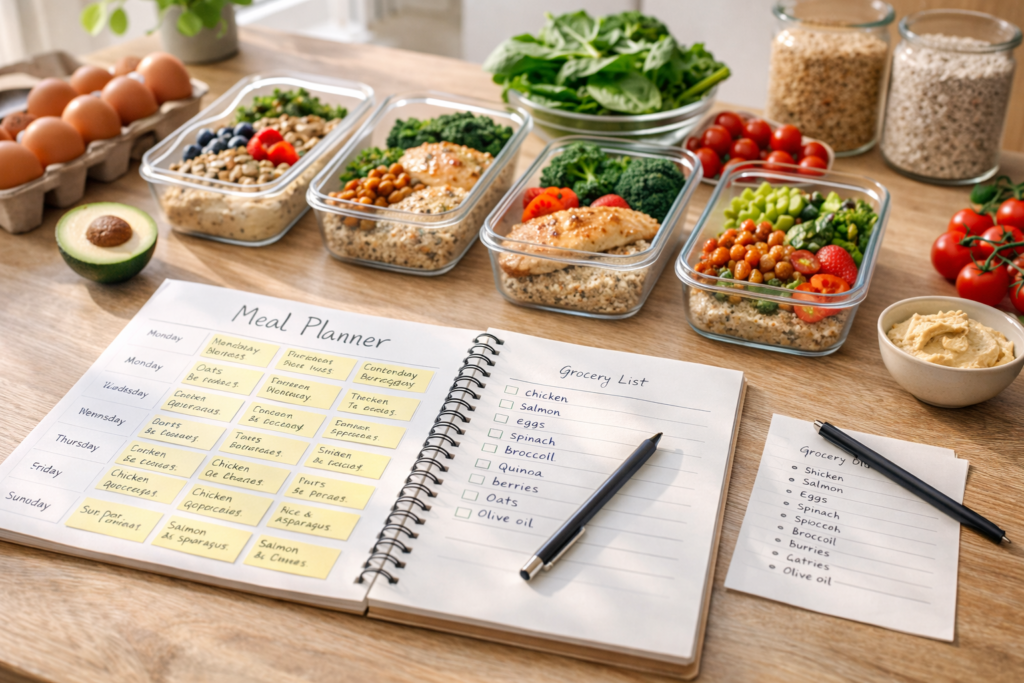

Meal planning is the process of deciding what to eat ahead of time. It involves selecting meals, preparing ingredients, and organizing food choices to support daily needs. Meal planning helps manage time, budget, nutrition intake, and food consistency. It reduces reliance on last-minute food decisions and supports balanced eating habits.
This article explains meal planning in detail, including methods, benefits, steps, common mistakes, and ways to build a routine that works long term.
What Meal Planning Means
Meal planning means organizing meals before they are eaten. This can include planning meals for a day, a week, or longer. It may involve writing meal lists, shopping with intention, and preparing food in advance.
Meal planning does not require strict rules or fixed menus. It can be flexible and adjusted based on schedule, preference, and availability.
Why Meal Planning Matters
Meal planning supports consistency in eating habits. When meals are planned, food choices are less likely to depend on stress, time pressure, or convenience foods.
Meal planning helps with:
- Regular meal timing
- Portion awareness
- Grocery cost control
- Reduced food waste
- Balanced nutrient intake
Consistency improves when decisions are made ahead of time.
Meal Planning and Daily Structure
Daily routines affect food choices. Meal planning helps align meals with work hours, family needs, and activity levels.
Planning allows meals to fit into:
- Morning routines
- Work schedules
- School hours
- Evening commitments
This reduces skipped meals and irregular eating patterns.
Types of Meal Planning
Daily Meal Planning
Daily meal planning focuses on deciding meals one day at a time. This works for people with changing schedules.
It involves:
- Choosing meals for the day
- Preparing ingredients as needed
- Adjusting based on hunger or activity
Weekly Meal Planning
Weekly meal planning involves selecting meals for several days. This is the most common method.
It includes:
- Creating a weekly meal list
- Shopping once or twice per week
- Preparing some foods in advance
Weekly planning supports routine and cost control.
Batch Meal Planning
Batch meal planning involves preparing multiple meals at once.
This approach:
- Saves time
- Reduces cooking frequency
- Supports portion control
Prepared meals can be stored and used across several days.
Steps to Start Meal Planning
Meal planning works best when broken into steps.
Step 1: Review Schedule
Check work hours, events, and commitments. Identify days with limited time and days with more flexibility.
This helps decide:
- When to cook
- When to use prepared meals
- When to eat outside
Step 2: Choose Meals
Select meals based on preference, time, and available ingredients.
Balance meals with:
- Carbohydrate sources
- Protein sources
- Fat sources
- Vegetables or fruits
Variety supports nutrient intake.
Step 3: Create a Grocery List
A grocery list prevents impulse buying and missed items.
Organize the list by:
- Produce
- Proteins
- Grains
- Pantry items
Shopping with a list supports consistency.
Step 4: Prepare Ingredients
Ingredient preparation saves time later.
This may include:
- Washing produce
- Cutting vegetables
- Cooking grains
- Portioning proteins
Preparation can be done on one or multiple days.
Meal Planning for Balanced Eating
Balanced meals include multiple food groups. Meal planning helps ensure balance across the day.
A balanced meal often includes:
- A carbohydrate source
- A protein source
- A fat source
- Fiber from plants
Planning reduces reliance on single food types.
Meal Planning for Breakfast
Breakfast planning helps prevent skipped meals.
Simple planning ideas include:
- Oats prepared in advance
- Eggs with vegetables
- Yogurt with fruit
- Smoothies with measured ingredients
Prepared options reduce morning stress.
Meal Planning for Lunch
Lunch planning helps avoid convenience foods during busy hours.
Lunch planning strategies:
- Use leftovers from dinner
- Prepare meals in containers
- Choose foods that store well
Planned lunches support portion control.
Meal Planning for Dinner
Dinner planning helps manage evening time and food choices.
Dinner planning may include:
- Simple recipes
- Slow cooker meals
- Sheet pan meals
- Repeating meals during the week
Planning reduces decision fatigue.
Meal Planning for Snacks
Snacks can be planned to support hunger control.
Snack planning ideas:
- Fruit portions
- Nuts or seeds
- Yogurt servings
- Prepared vegetables
Planned snacks reduce unplanned eating.
Meal Planning and Portion Control
Meal planning supports portion awareness by defining serving sizes ahead of time.
Portion control improves when:
- Meals are portioned during preparation
- Containers are used
- Eating is not rushed
Awareness improves consistency.
Meal Planning and Grocery Budget
Meal planning helps manage spending.
Budget support comes from:
- Buying only needed items
- Reducing food waste
- Cooking at home more often
- Using ingredients across meals
Planning improves cost control.
Meal Planning and Food Waste
Food waste decreases when meals are planned.
Waste reduction strategies:
- Plan meals around perishable foods
- Use leftovers
- Freeze unused portions
- Rotate stored foods
Organization supports efficiency.
Meal Planning for Families
Family meal planning helps manage different preferences.
Helpful approaches:
- Choose base meals with flexible additions
- Involve family members in planning
- Prepare shared ingredients
Planning supports shared routines.
Meal Planning for Individuals
Individual meal planning focuses on personal schedule and needs.
Benefits include:
- Time control
- Food preference alignment
- Reduced stress
Planning can be simple and flexible.
Meal Planning for Workdays
Workdays often limit cooking time.
Planning for workdays may include:
- Prepared lunches
- Quick breakfasts
- Reheated dinners
Preparation supports consistency.
Meal Planning for Weekends
Weekends offer time for preparation.
Weekend planning ideas:
- Batch cooking
- Trying new recipes
- Restocking pantry items
This supports the upcoming week.
Meal Planning and Nutrition Goals
Meal planning supports nutrition goals without strict rules.
It helps with:
- Regular protein intake
- Fiber inclusion
- Balanced calorie intake
- Reduced added sugars
Goals work best when meals are consistent.
Meal Planning and Weight Control
Weight control improves when meals are planned.
Meal planning helps by:
- Reducing impulse eating
- Supporting portion sizes
- Preventing skipped meals
No meal plan works without consistency.
Meal Planning and Time Management
Time management improves with planning.
Time savings come from:
- Fewer grocery trips
- Less daily decision making
- Faster meal preparation
Planning reduces daily effort.
Meal Planning Tools
Meal planning tools can support organization.
Examples include:
- Paper planners
- Digital notes
- Meal planning apps
- Calendar reminders
Tools should support habits, not replace them.
Meal Planning and Flexibility
Meal planning should allow changes.
Flexibility includes:
- Swapping meals
- Adjusting portions
- Eating outside when needed
Rigid plans often fail over time.
Common Meal Planning Mistakes
Some mistakes reduce effectiveness.
Common issues include:
- Planning too many meals
- Choosing complex recipes
- Ignoring schedule changes
- Not checking pantry items
Simple plans work better.
Meal Planning and Eating Out
Eating out can fit into meal planning.
Planning includes:
- Scheduling meals out
- Adjusting other meals
- Watching portion sizes
Balance matters more than rules.
Meal Planning and Cultural Foods
Cultural foods can be part of meal planning.
Planning focuses on:
- Preparation methods
- Portion balance
- Meal frequency
Cultural patterns support routine.
Meal Planning for Different Life Stages
Meal planning needs change over time.
General guidance:
- Children need regular meals
- Adults need balance
- Older adults need consistent intake
Planning adapts with lifestyle changes.
Meal Planning and Long-Term Habits
Meal planning works when it becomes routine.
Habits build through:
- Repetition
- Adjustment
- Realistic goals
Long-term habits matter more than short plans.
How to Start Meal Planning Today
Starting does not require full planning.
Simple steps:
- Plan one meal per day
- Write a grocery list
- Prepare one ingredient
- Repeat weekly
Progress builds confidence.
Summary
Meal planning is a method of organizing food choices ahead of time. It supports regular eating, portion control, time use, and budget management. Meal planning does not require strict rules or fixed menus. It works best when flexible, realistic, and consistent.
Building a meal planning habit takes time. Small steps lead to lasting routines that support daily needs and long-term health.