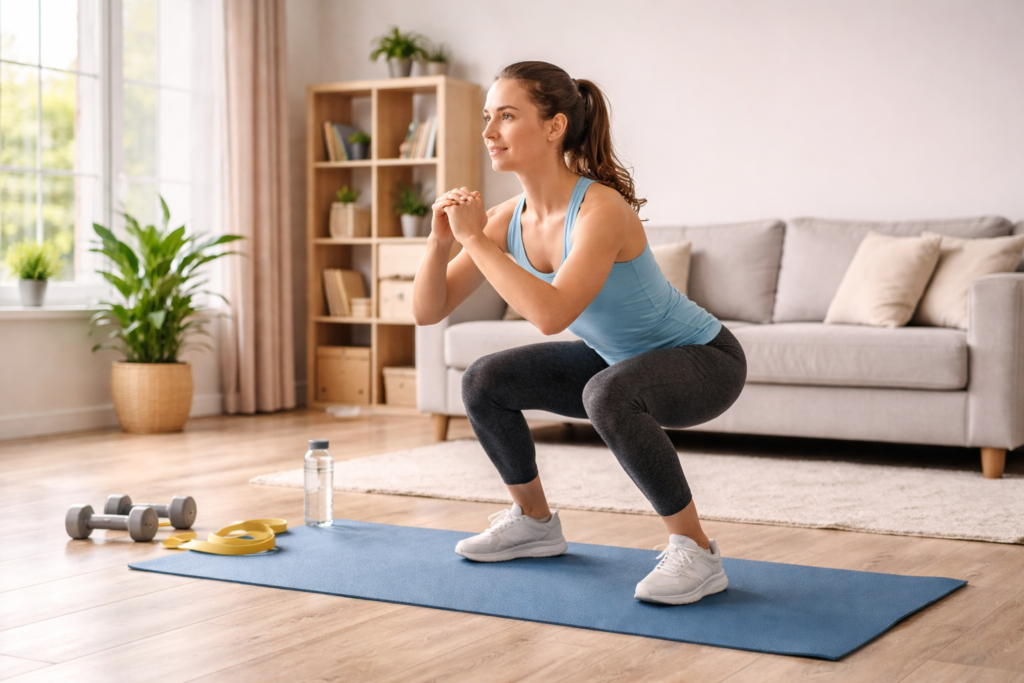

Home workouts refer to physical activity performed in a home setting without the need for a gym or training facility. They use body weight, household items, or simple equipment to support movement and exercise routines. Home workouts allow people to stay active while managing time, schedule, and comfort.
This article explains home workouts, how they work, types of exercises, planning routines, safety, and how to maintain consistency over time.
What Are Home Workouts
Home workouts are exercise routines completed at home. They do not require travel, gym memberships, or shared equipment. Exercises can be adjusted based on space, ability, and goals.
Home workouts may include:
- Body weight exercises
- Stretching routines
- Cardio movements
- Strength training
- Mobility practices
They are flexible and accessible.
Why Home Workouts Matter
Home workouts support regular physical activity. They remove barriers such as travel time and cost. They allow exercise to fit into daily routines.
Benefits include:
- Time management
- Schedule control
- Consistent movement
- Reduced interruptions
Consistency supports long-term health habits.
Home Workouts and Daily Routine
Daily schedules influence exercise habits. Home workouts allow short sessions that fit between tasks.
They can be done:
- In the morning
- During breaks
- In the evening
- Across multiple short sessions
This supports routine building.
Types of Home Workouts
Body Weight Workouts
Body weight workouts use the body as resistance.
Examples include:
- Squats
- Push-ups
- Lunges
- Planks
They require no equipment and support strength.
Cardio Home Workouts
Cardio workouts increase heart rate.
Examples include:
- Jumping movements
- Marching in place
- Step movements
- Shadow boxing
They support endurance and circulation.
Strength Training at Home
Strength training builds muscle using resistance.
At home, resistance may come from:
- Body weight
- Resistance bands
- Water bottles
- Backpacks
Strength training supports daily movement.
Flexibility and Mobility Workouts
Flexibility workouts support joint movement.
Examples include:
- Stretching routines
- Mobility drills
- Range of motion exercises
They support movement quality.
Low Impact Home Workouts
Low impact workouts reduce stress on joints.
They include:
- Controlled movements
- Seated exercises
- Standing balance work
They suit many fitness levels.
Equipment for Home Workouts
Home workouts can be done with little or no equipment.
Optional items include:
- Yoga mat
- Resistance bands
- Light weights
- Chair
- Towel
Equipment supports variety but is not required.
Space Requirements for Home Workouts
Home workouts require limited space.
A small clear area allows:
- Standing movement
- Floor exercises
- Stretching
Furniture can be moved temporarily if needed.
Planning a Home Workout Routine
Planning supports consistency.
Steps include:
- Decide workout days
- Choose session length
- Select exercise types
- Set rest days
Plans should match schedule.
Home Workouts for Beginners
Beginners benefit from simple routines.
Guidelines include:
- Start with short sessions
- Focus on form
- Rest as needed
- Increase duration gradually
Progress supports habit building.
Home Workouts for Busy Schedules
Short workouts support busy days.
Options include:
- Ten-minute sessions
- Split workouts
- Movement breaks
Small sessions still contribute to activity.
Home Workouts and Warm-Up
Warm-up prepares the body for movement.
Warm-up activities include:
- Marching
- Arm circles
- Light stretching
Warm-up reduces injury risk.
Home Workouts and Cool Down
Cool down supports recovery.
Cool down includes:
- Stretching
- Slow breathing
- Gentle movement
It supports muscle recovery.
Home Workouts and Safety
Safety matters during exercise.
Key points:
- Use proper form
- Avoid pain
- Clear the space
- Wear stable footwear
Listening to the body prevents injury.
Home Workouts Without Equipment
Equipment-free workouts rely on movement patterns.
Examples include:
- Squats
- Push-ups
- Sit-ups
- Standing reaches
They are accessible to most people.
Home Workouts With Simple Tools
Household items can support exercise.
Examples:
- Chair for support
- Bottles for resistance
- Towel for stretching
Creativity supports variety.
Home Workouts and Consistency
Consistency matters more than duration.
Tips include:
- Set reminders
- Schedule workouts
- Track sessions
Regular movement builds habits.
Home Workouts and Motivation
Motivation changes over time.
Support motivation by:
- Setting simple goals
- Changing routines
- Using music
- Tracking progress
Routine supports consistency.
Home Workouts and Weight Management
Home workouts support calorie use.
Weight management depends on:
- Activity level
- Eating habits
- Consistency
Exercise supports energy balance.
Home Workouts and Muscle Strength
Strength improves with repeated effort.
Home workouts support strength by:
- Using resistance
- Increasing repetitions
- Adding variations
Progress occurs gradually.
Home Workouts and Mental Health
Movement supports mental well-being.
Home workouts help by:
- Reducing stress
- Supporting routine
- Encouraging focus
Movement supports balance.
Home Workouts and Age Groups
Home workouts suit different ages.
General considerations:
- Children benefit from movement play
- Adults benefit from structured routines
- Older adults benefit from balance and strength work
Adjustments support safety.
Home Workouts and Recovery
Recovery supports progress.
Recovery includes:
- Rest days
- Sleep
- Stretching
Overtraining reduces consistency.
Common Home Workout Mistakes
Some habits reduce results.
Common mistakes include:
- Skipping warm-up
- Doing too much too soon
- Ignoring rest
- Poor form
Awareness improves outcomes.
Home Workouts and Progress Tracking
Tracking supports motivation.
Tracking methods include:
- Writing sessions
- Using apps
- Counting repetitions
Tracking shows patterns.
Home Workouts and Online Resources
Online resources support guidance.
These include:
- Videos
- Written plans
- Timed workouts
Choose reliable sources.
Home Workouts and Flexibility
Flexibility allows adaptation.
Plans should allow:
- Missed days
- Short sessions
- Schedule changes
Flexibility supports long-term use.
Building a Home Workout Habit
Habits build through repetition.
Steps include:
- Choose a time
- Start small
- Repeat weekly
- Adjust as needed
Habits grow over time.
Home Workouts and Long-Term Health
Regular movement supports long-term health.
Home workouts support:
- Mobility
- Strength
- Endurance
They fit many lifestyles.
How to Start Home Workouts Today
Starting does not require preparation.
Simple steps:
- Choose one exercise
- Move for five minutes
- Repeat tomorrow
Progress builds gradually.
Summary
Home workouts provide a way to stay active without leaving home. They support routine, flexibility, and consistency. Home workouts do not require equipment or long sessions. They work best when planned around daily life and adjusted as needed.