
An active lifestyle refers to regular movement included in daily life. It involves planned activity and natural movement that supports body use and routine balance. Many people aim to stay active through work tasks, travel habits, exercise sessions, and leisure movement. This article explains the meaning of an active lifestyle, its role in daily routines, practical methods, structure, safety, and long term consistency. The content is written to support readers searching for guidance on building and maintaining an active lifestyle.
Meaning of Active Lifestyle
An active lifestyle means choosing movement as part of daily living. It does not require formal training or complex routines. Movement may include walking, lifting, stretching, cycling, or body use during tasks. The focus is on regular motion rather than isolated effort.
An active lifestyle can be adapted to different schedules, ages, and environments. It supports body coordination, posture awareness, and routine structure.
Daily Movement Patterns
Daily movement patterns shape an active lifestyle. These patterns include walking between locations, using stairs, standing during tasks, and changing posture throughout the day.
Examples of daily movement include:
- Walking during errands
- Standing during phone use
- Carrying items by hand
- Stretching during breaks
- Moving joints through full ranges
Small actions repeated daily contribute to overall activity levels.
Planned Physical Activity
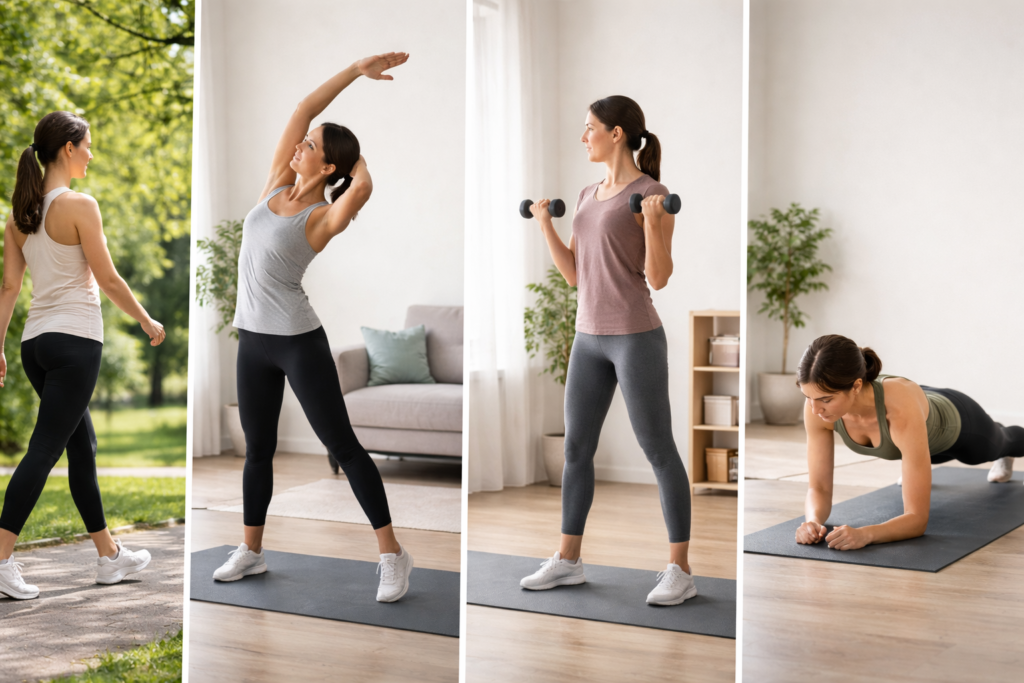
Planned physical activity supports structure within an active lifestyle. This may include scheduled exercise sessions, home routines, or outdoor activities.
Planned activities include:
- Walking sessions
- Bodyweight routines
- Stretching sessions
- Yoga practice
- Cycling or swimming
These activities can be adjusted based on time availability and access to space.
Role of Walking
Walking is a common form of movement within an active lifestyle. It requires no equipment and fits into many routines. Walking supports joint use and coordination.
People may walk for transport, recreation, or routine breaks. Short walks repeated across the day contribute to total movement time.
Role of Stretching and Mobility
Stretching and mobility work support joint movement and posture awareness. These practices involve moving joints through controlled ranges.
Stretching may occur in the morning, during breaks, or after activity. Mobility routines may include spine movement, hip movement, and shoulder movement.
These practices support ease of movement during daily tasks.
Active Lifestyle at Work
Many jobs involve seated time or repeated motion. An active lifestyle includes movement during work hours.
Workplace movement may include:
- Standing breaks
- Short walks
- Desk stretches
- Posture changes
- Light joint movement
These actions help balance limited movement patterns.
Active Lifestyle at Home
Home environments offer many opportunities for movement. Household tasks involve lifting, reaching, and walking.
Activities at home include:
- Cleaning tasks
- Gardening
- Organizing items
- Home exercise routines
- Stretching sessions
Using home tasks as movement opportunities supports activity levels.
Outdoor Movement
Outdoor movement supports variety in an active lifestyle. Activities may include walking paths, cycling routes, or open space movement.
Outdoor environments allow natural changes in terrain and pace. These changes support balance and coordination.
Active Lifestyle for Beginners
Beginners may start with simple changes. Increasing daily steps, adding short movement breaks, and reducing prolonged sitting are common starting points.
Planned sessions may be short. Consistency matters more than duration. Learning body signals supports gradual progress.
Active Lifestyle for Older Adults
Older adults benefit from regular movement adapted to joint limits. Walking, stretching, and balance exercises support daily function.
Chair based movement and supported routines are common options. Safety and comfort guide activity choice.
Active Lifestyle and Balance
Balance is part of daily movement. Standing on one leg, changing direction, and adjusting posture involve balance control.
Balance focused activities include:
- Single leg standing
- Controlled stepping
- Slow direction changes
- Yoga balance poses
These movements support coordination.
Active Lifestyle and Strength Use
Strength use occurs during daily tasks such as lifting objects, carrying items, and standing from seated positions.
Bodyweight exercises support strength use without equipment. Examples include squats, wall push movements, and floor transitions.
Time Management and Consistency
Time management supports consistency. Short activity periods spread across the day reduce barriers.
Strategies include:
- Scheduling walks
- Setting movement reminders
- Linking movement to daily habits
- Using breaks for stretching
Consistency builds routine patterns.
Active Lifestyle and Technology
Technology supports activity tracking and reminders. Step counters, timers, and apps help monitor movement.
Technology should support awareness rather than replace movement choice.
Safety and Awareness
Safety is important in an active lifestyle. Movement should stay within personal limits. Warm up actions prepare joints for use.
Pain signals should be respected. Modifications and rest periods support safe practice.
People with health concerns should seek guidance before starting new routines.
Equipment and Clothing
An active lifestyle requires minimal equipment. Comfortable clothing supports ease of movement.
Basic items may include:
- Walking shoes
- Stretching mats
- Support straps
Equipment use depends on activity choice.
Active Lifestyle and Recovery
Recovery allows the body to adapt to movement. Rest periods, stretching, and light movement support recovery.
Active recovery may include walking or gentle stretching rather than complete rest.
Mental Focus and Habit Building
Mental focus supports habit formation. Setting clear goals and tracking progress support routine maintenance.
Movement becomes easier to maintain when linked to daily habits such as commuting or breaks.
Social Support
Social support influences activity habits. Group walks, classes, or shared routines support consistency.
Support may come from friends, family, or community groups.
Common Barriers
Common barriers include time limits, work demands, and lack of space. Solutions involve adjusting activity type and duration.
Flexible routines reduce disruption caused by schedule changes.
Active Lifestyle Across Life Stages
An active lifestyle changes across life stages. Children, adults, and older adults adapt movement based on needs and capacity.
Maintaining movement across stages supports continuity.
Travel and Movement
Travel routines may disrupt activity. Walking during travel, stretching in transit, and using stairs support continued movement.
Portable routines help maintain consistency.
Cultural and Social Context
Movement practices vary across cultures. Walking, manual tasks, and group activities form part of daily life in many regions.
An active lifestyle adapts to cultural norms and environments.
Long Term Sustainability
Sustainability depends on enjoyment, access, and routine fit. Choosing activities that match lifestyle patterns supports long term continuation.
Adjusting routines over time prevents stagnation.
Conclusion
An active lifestyle involves regular movement integrated into daily life. It includes walking, stretching, planned activity, and natural motion during tasks. By focusing on consistency, awareness, and adaptation, individuals can maintain movement across changing schedules and life stages. An active lifestyle supports daily function and routine balance.