





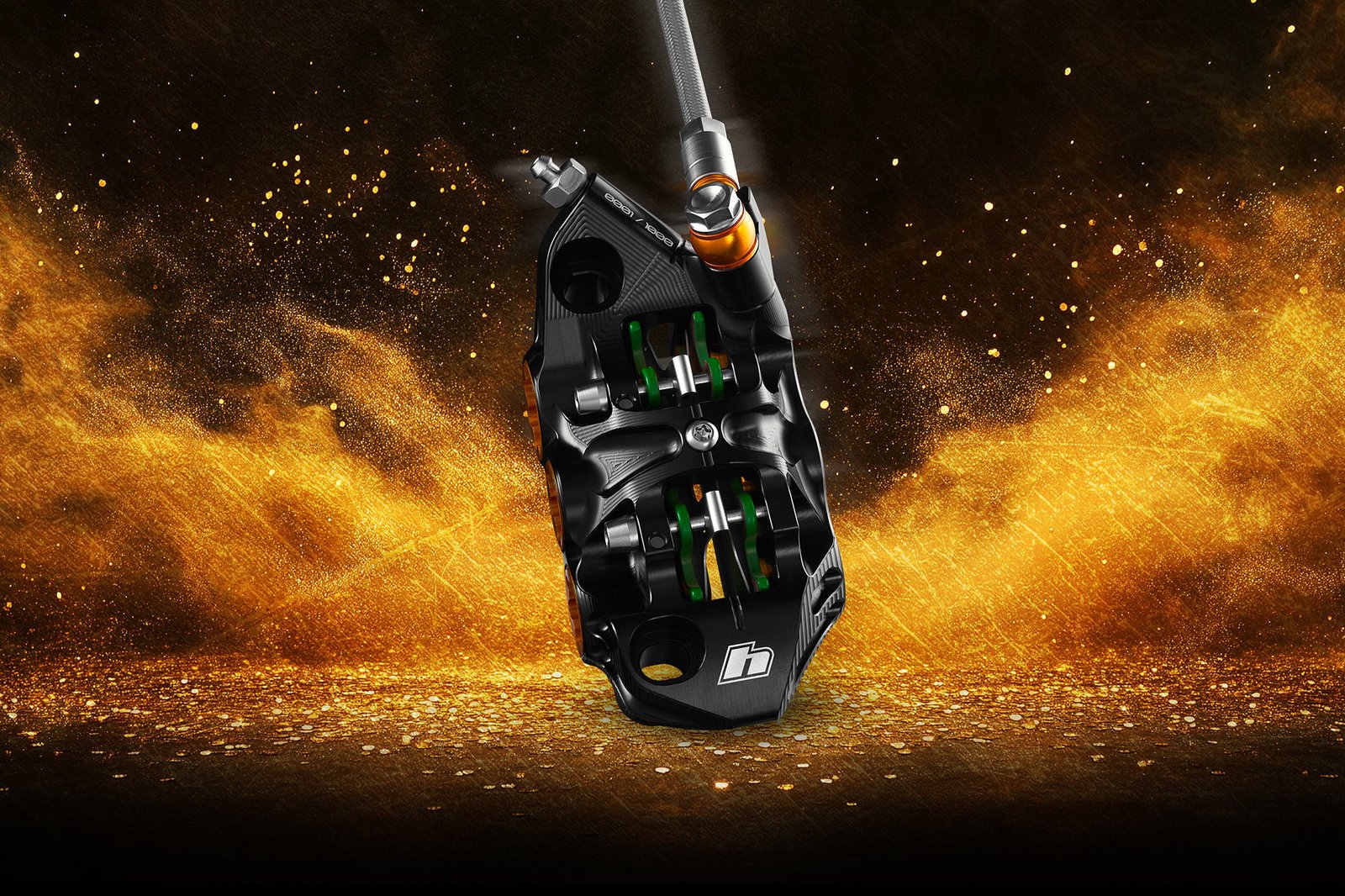
For the biggest and baddest brakes that Hope offers, look no further than the V6 Ti. Over the past 20 years, Hope has fully modernized their biggest and most unique mountain bike brakes, delivering more power and control for today’s bigger bikes and faster riders.
Now, the brakes see an evolution with the new EVO V6 Ti that pairs updated six-piston calipers with all-new 3.3mm thick slotted rotors for maximum heat control. Plus, there’s a limited Mono Edition, of which only 1,000 sets will be offered. We’ll start with the calipers…
Hope EVO V6Ti Brakes
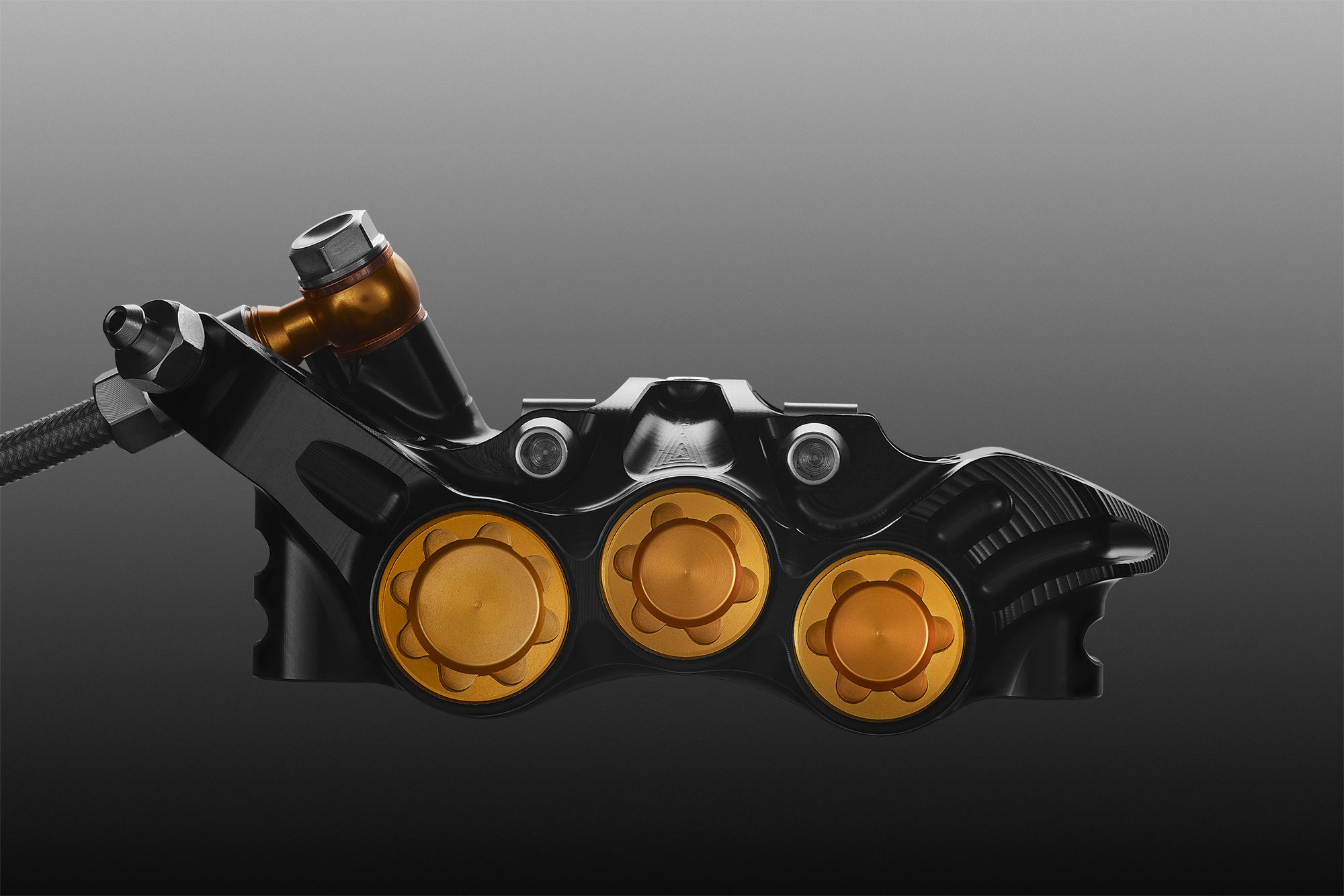
It’s not just the massive 6-piston design that makes these unique. Hope machines the entire caliper body from one piece of aluminum. This creates a stronger, stiffer body compared to typical two-piece designs that get bolted together. The result is more precise braking performance and lighter weight.
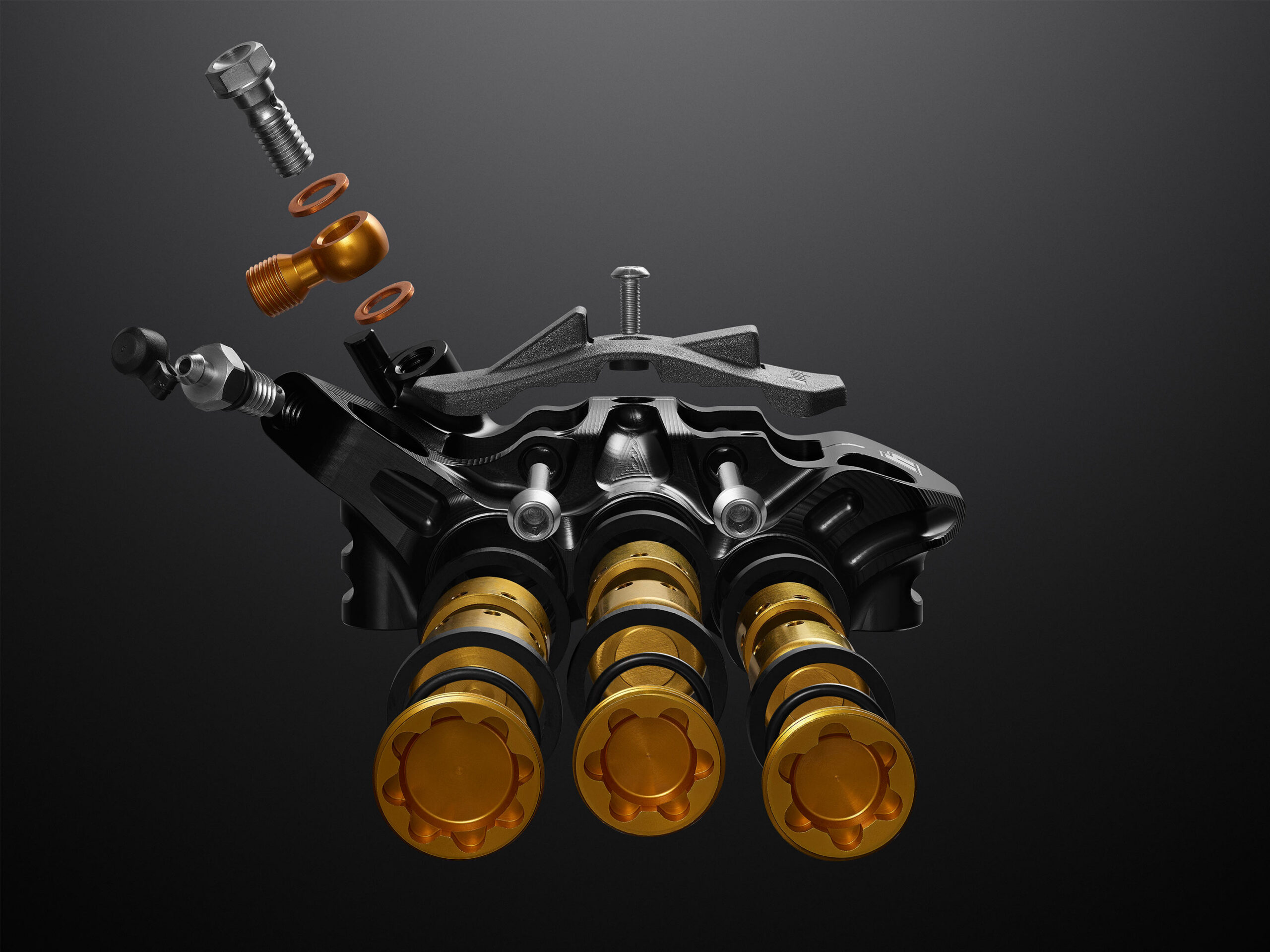
Inside are titanium pistons with Ti-Nitride coatings to lower friction and improve durability. So, the pistons will slide in and out more easily for a smoother brake feel and better pad retraction. The pistons are also cross-drilled to help with cooling.
The larger body helps dissipate heat more quickly, and it makes room for larger brake pads, which not only boost stopping power but also consistency and modulation.
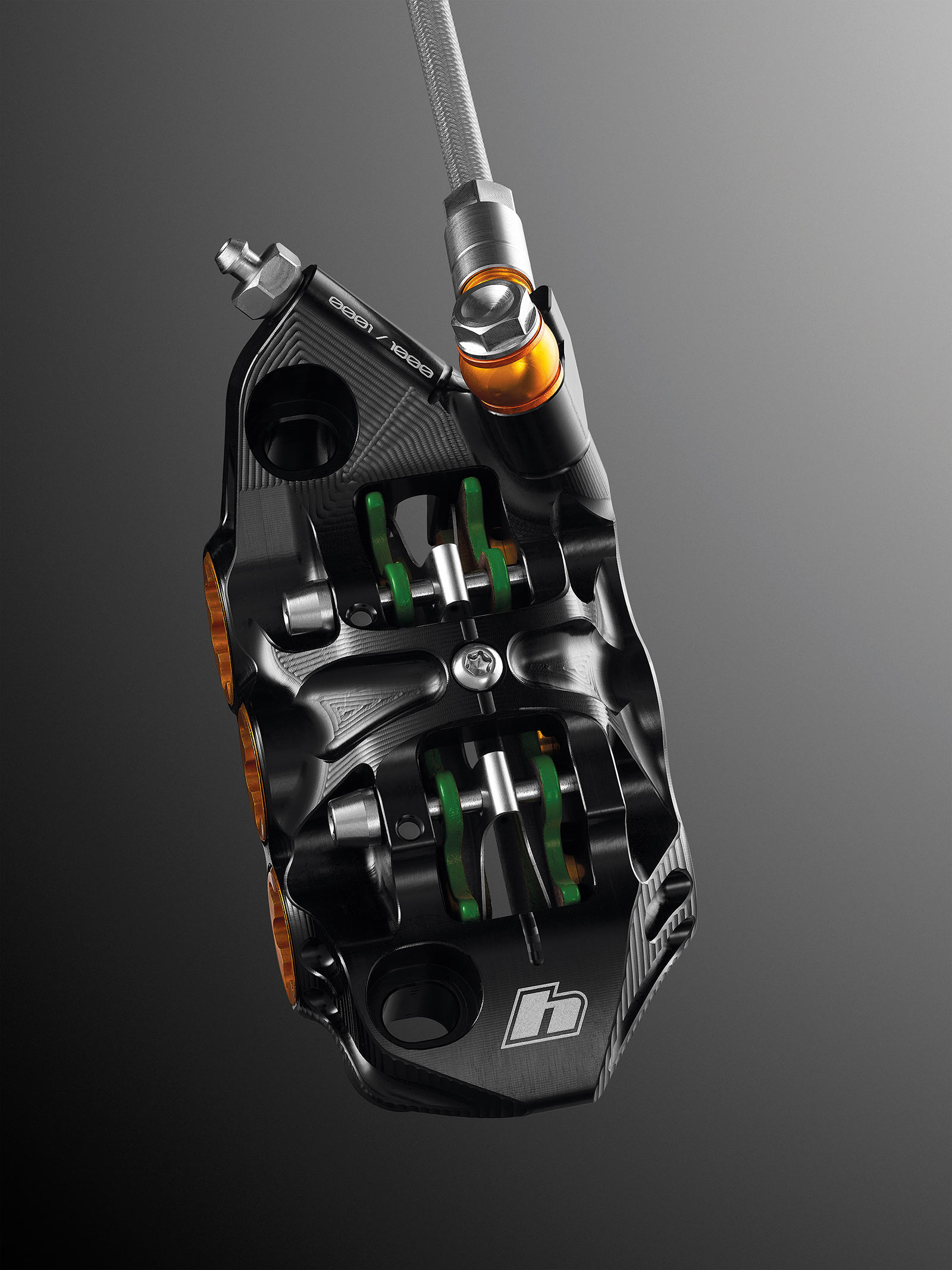
However, that oversized body does require a unique mounting method. It uses a radial mount rather than a standard post mount design. Meaning, it’s only compatible with one of the dedicated brake mounts from Hope and requires you to run rotors that are 20mm larger in diameter than the frame’s minimum.
Honestly, if you’re upgrading to these brakes, you’re probably already running larger rotors, so the only real change is that you’ll need one of their specific adapters/spacers to fit these to your bike. As for your bike, the adapters are designed exclusively to fit on post-mount forks and frames with 200mm or 220mm rotors.
The new EVO V6Ti brakes are also only compatible with 2.3mm and 3.3mm (vented) rotors, like these…
Hope T-Slot Vented Rotor
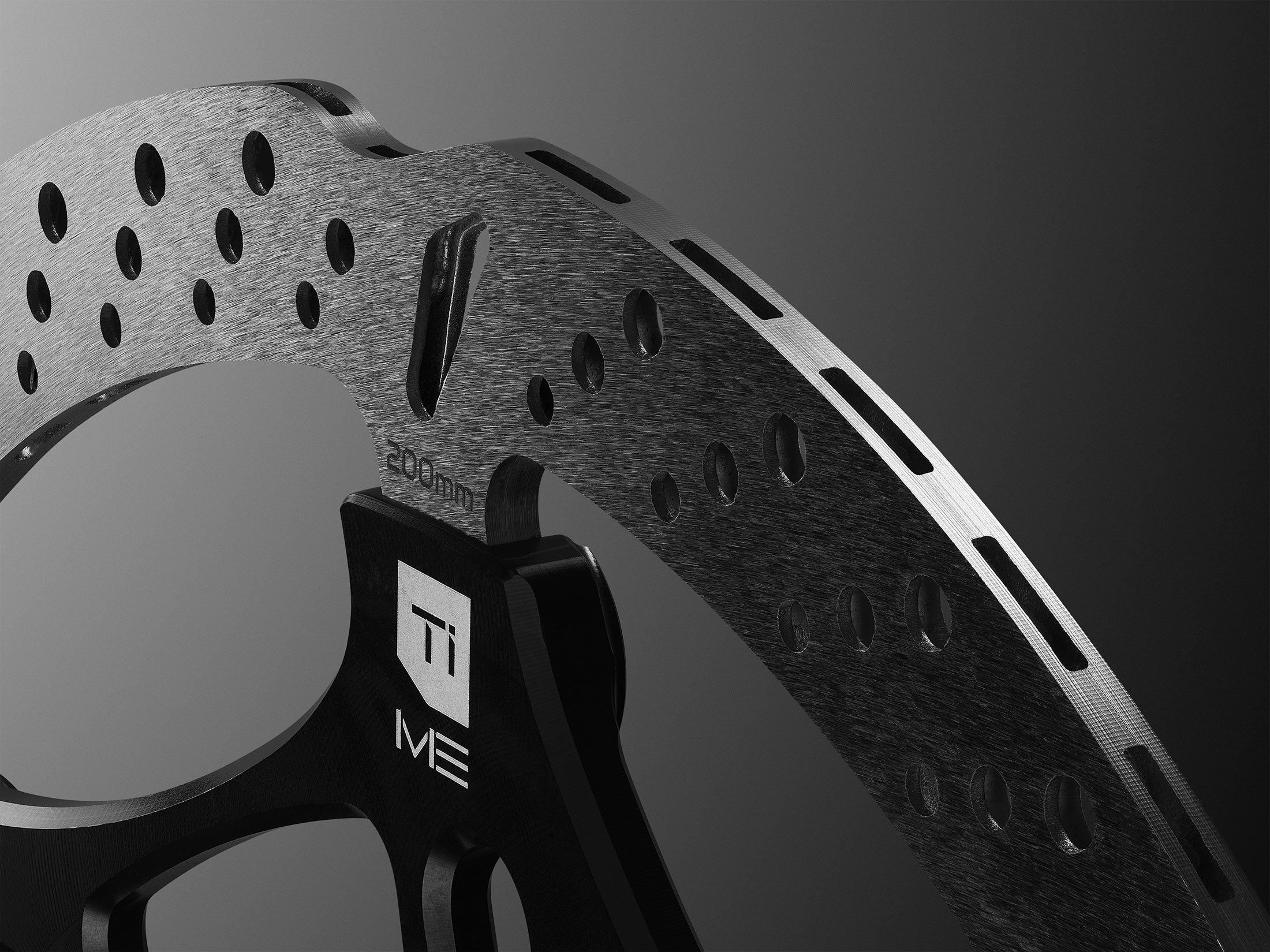
The new Hope T-Slot Vented Rotor uses a thicker 3.3mm braking surface with cooling fins between the braking surfaces to significantly reduce rotor temperatures, the first such design we’ve seen for mountain bikes.
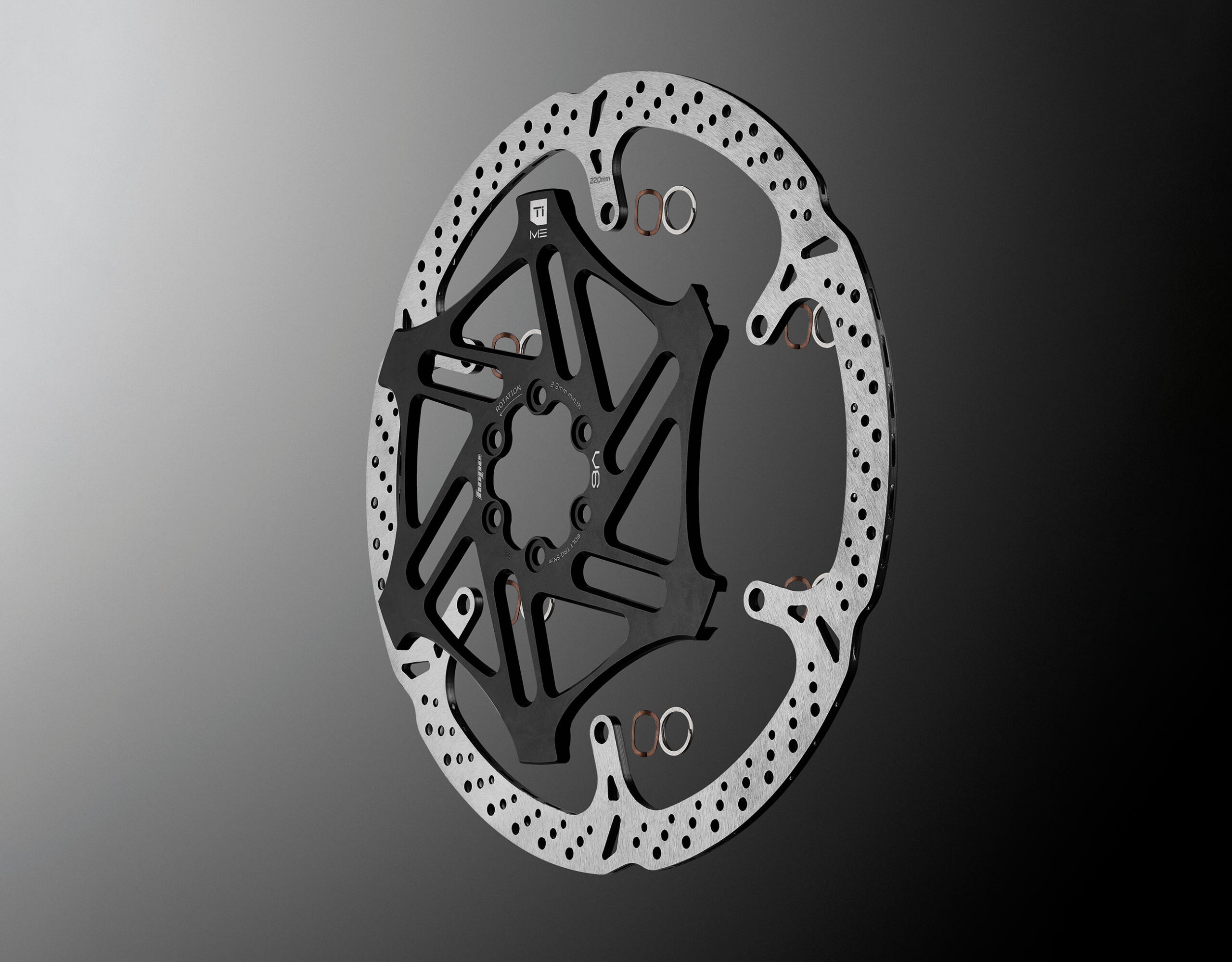
The carrier mates with a floating design that allows the outer rotor to fully float, preventing distortion under load. Even better, the design allows the outer rotor to be replaced, eliminating the need to replace the entire rotor when it wears.
Upgraded Levers, Too

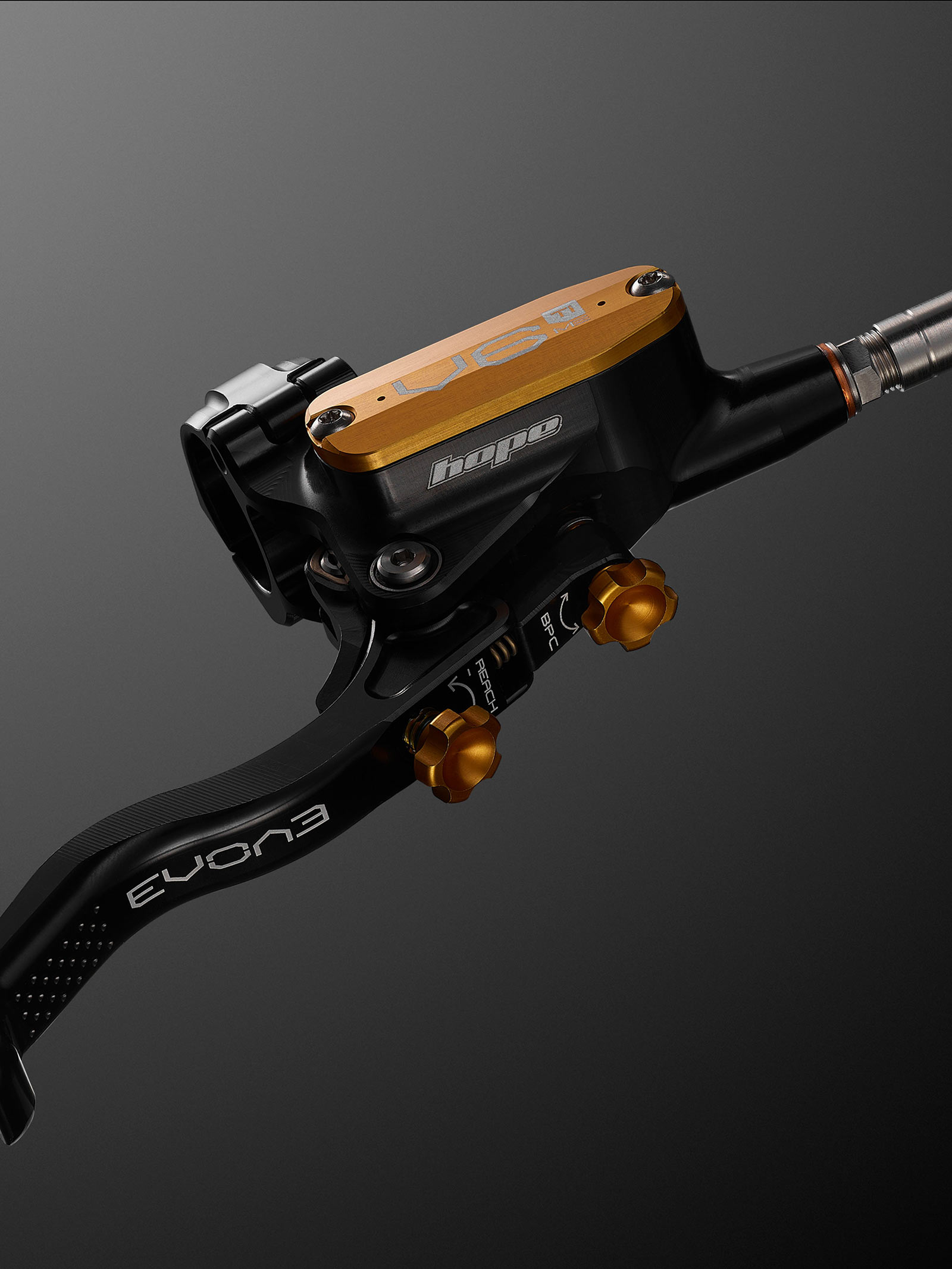
The levers and master cylinder are updated to match, with a new cam designed to decrease the free lever stroke while maintaining the feel and modulation in the braking zone, a feature borrowed from their Tech 4 brakes. They say this delivers a firmer feel at the bite point, then a gradual ramp in power as you pull the lever further.
Only 1000 Mono Edition Brakes Will Be Sold
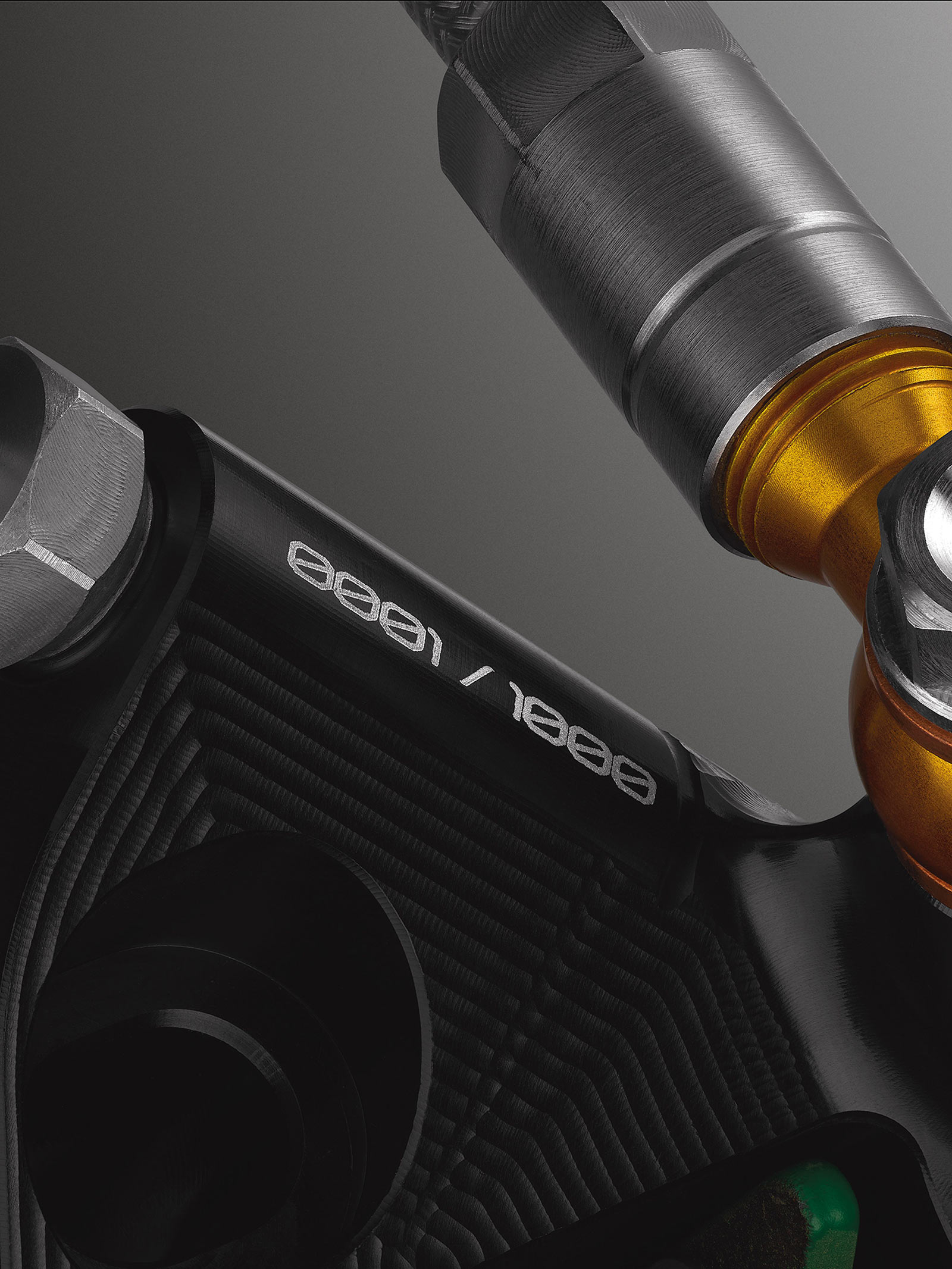
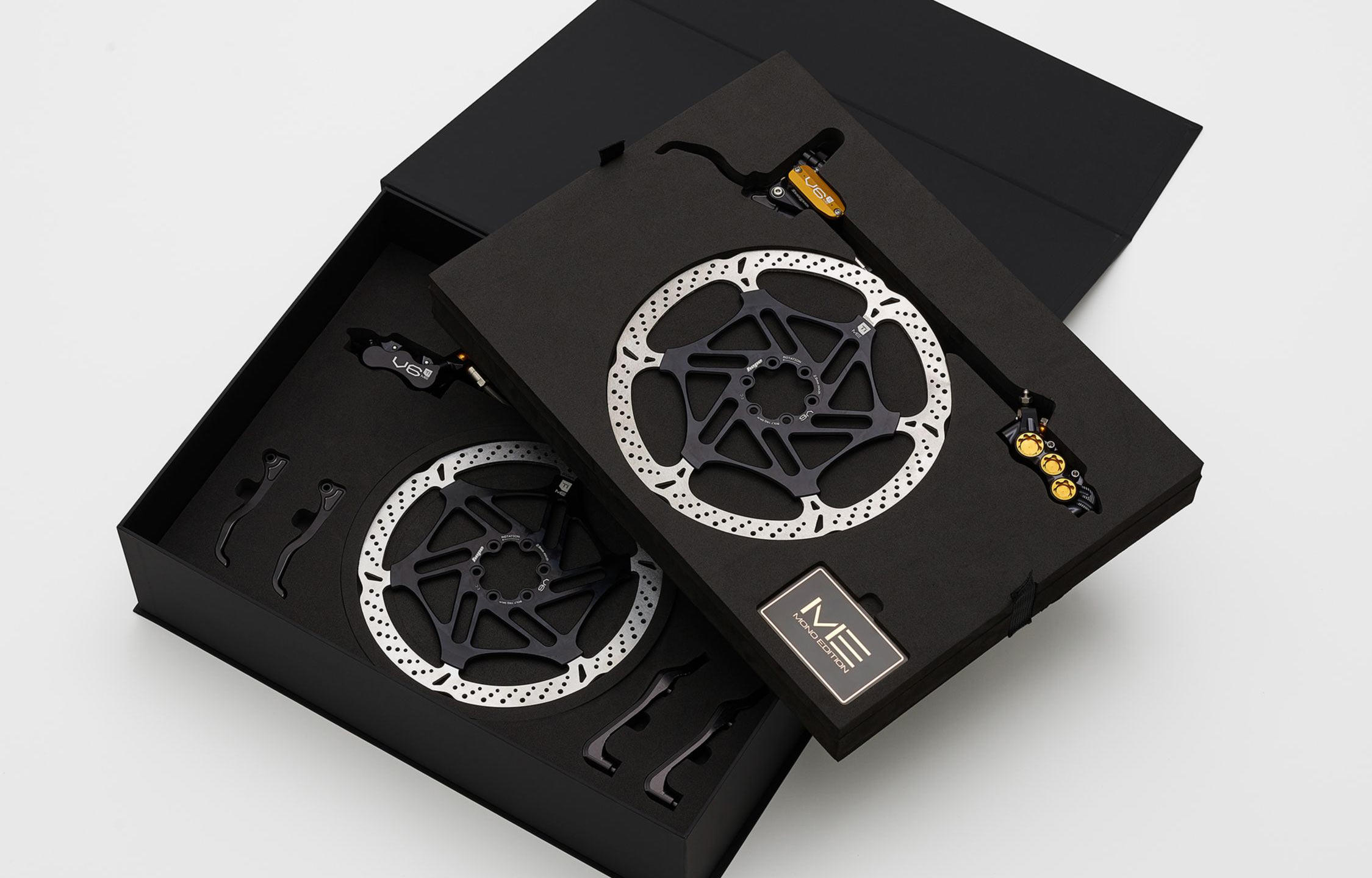
To celebrate the 20 years since the first V6 Ti brake was introduced (and 23 years since the first Hope six piston brake!), Hope is offering the EVO V6 Ti in a special Mono Edition shown above. Limited to 1000 pairs, each individually numbered set will include a special etching and serial number, and a special black and gold color way inspired by the originals.
In the box you’ll find:
- A Pair of EVO V6Ti Mono Edition Brakes (etched with the edition number)
- 2x T Slot Vented Rotors
- Additional power lever blades
- All mounts and hardware
- Additional brake pads
- V6Ti Key Ring and Unique Mono Edition Card
The sets will be available in braided or standard hose starting August 1 through Hope dealers. Choose from rotor combinations of 220/220 or 220/200. MSRP is £1400.00 / €1750.00 / $1940.00. It’s not mentioned if the updated EVO V6Ti will be available in a non-Mono Edition, or if the EVO V6Ti will even be available after the Mono Edition is sold out, so if you want some, you’d better get your order in now.
massive-hope-evo-v6-ti-brakes-get-mono-edition-celebrating-20-years-plus-new-slotted-rotors